This is an edited estimate of lifestyle compatibility, not an animal value rating. A higher score indicates that, based on current data, the animal is easier to integrate into your daily routine.
Children and families 34Apartments 99Bedrooms 99Frequent travel 40
The composite score is calculated by weighting nine factors: beginner-friendliness, handling ease, interaction, space requirements, cost, maintenance, travel, veterinary access, and safety. Read risk signals according to field direction: lower scores for biting, escape, and toxicity indicate greater safety; higher scores for noise, odor, and cleaning indicate less hassle. Combine this page's environmental requirements and risk notes with your judgment; do not rely solely on the total score.
BEFORE YOU COMMIT
First check whether it fits your life
This brief brings together the space, maintenance, feeding, lifespan and veterinary conditions recorded on this page so you know what to verify next.
45/100 · Requires careful assessment
A better fit if
The living conditions need closer planning
Adult space is relatively easy to plan, but use the recommended enclosure as the baseline
Daily maintenance requires a steady time commitment
Resolve these first
Molting window:Do not move or feed during the molting period; temporary inactivity is often natural behavior.
Environmental control needs stricter management
Confirm an exotic veterinarian and emergency route before purchase
Adult size
1.18–2.36 in
Reference Lifespan
10 to 20 years
Minimum space
Small group setup: floor area of 35.43 × 17.72 in or larger, with at least 5.91 in of excavatable sand/soil, deepening as the animals grow. Freshwater/saltwater pools should have sloped sides.
Veterinary Accessibility
Very difficult
This is a comparison aid based on the current record, not a purchase, medical or local-law conclusion. Check the sources and local conditions before continuing.
THINGS OWNERS UNDERESTIMATE
Common Underestimations by Keepers
Molting windowDo not move or feed during the molting period; temporary inactivity is often natural behavior.
Safe handlingAppearing calm does not mean there is no risk; prepare tools, containers, and an allergy emergency plan first.
VETERINARY ACCESS
Veterinary Accessibility
Very difficult
Routine preventive care is infrequent; management relies primarily on husbandry and specialist consultation.
Extremely difficult; resources are limited when serious injury occurs.
Specialist Exotic Pet Care Typically Required
DATA STATUS
Where this record stands
Editorial example
Last updated
2026-09-07
Fields checked
No field review record yet
Reference sources
1 · Reference sources
Professional review
Pending veterinary or taxonomic review
Local rules
Local rules need verification
Source links are starting points for reading. A group-level guide does not verify every value for each species. Check local rules separately.
Active mostly at night or dusk; minimize disturbance during molting.
Availability of Captive-Bred Individuals
Moderate
Temperament and Aggression
Pinching can cause injury; extremely vulnerable during molting.
Toxicity and Contact Risks
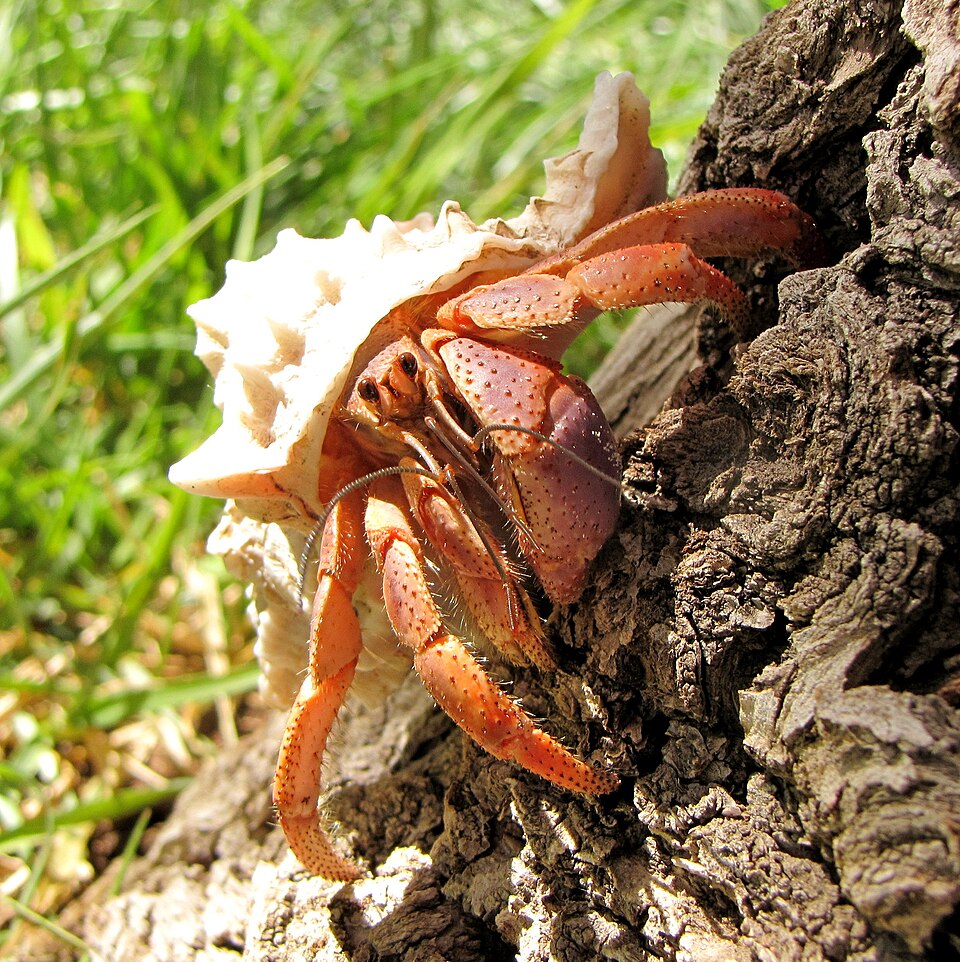
Non-venomous; avoid rough handling or pulling them out of their shells. Contact Risks: Medium。
Socialization and Handling
Housing in groups, providing multiple suitable natural empty shells. Do not use painted shells.
Environmental Parameters
Temperature Gradient
Maintain warmth with a temperature gradient; avoid bottom heat sources that could damage the molting area.
Humidity and Ventilation
75 to 85%. Relies on moist air for respiration; humidity and ventilation are designed simultaneously.
Lighting and Circadian Rhythm
Stable day-night light cycle.
Basking Spot / Localized Heat
Maintain warmth with a temperature gradient; avoid bottom heat sources that could damage the molting area.
UVB Requirements
Stable day-night light cycle.
Adult Space
Minimum: Small group setup: floor area of 35.43 × 17.72 in or larger, with at least 5.91 in of excavatable sand/soil, deepening as the animals grow. Freshwater/saltwater pools should have sloped sides. Recommended: Small group planning: base area of 35.43 × 17.72 in or larger, with at least 5.91 in of diggable substrate that deepens according to body size. Freshwater/seawater pools feature both upper and lower slopes; the recommended plan adds approximately 20% more substrate and hiding space at the lowest level to facilitate molting and cleaning.
Substrate and Water
Set depth according to needs of fossorial, burrowing, or decomposer species; avoid pesticides and fertilizers. · Use shallow water dishes or localized water sources; avoid standing water and drowning of juveniles.
These ranges are for planning the environment of a healthy adult, not a constant value for the entire enclosure, and do not cover disease, breeding, or juvenile stages.
Diet and Nutrition
Diverse unseasoned foods, animal protein, calcium sources, and plant ingredients. Do not replace with a single pellet diet long-term.
Feeding Frequency
Typically every 1 to 2 weeks, pause and observe condition before and after molting.
Live Prey Requirement
Not Required
Rodent Pellets
Not Required
Enclosure and activity space
Small group setup: floor area of 35.43 × 17.72 in or larger, with at least 5.91 in of excavatable sand/soil, deepening as the animals grow. Freshwater/saltwater pools should have sloped sides.
Dimensions are editor suggestions, not mandatory minimum standards in all regions. Group size, individual body size, and layout may require more space.
Frequently Asked Questions
Can both water bowls contain fresh water?
No, they require separate dechlorinated fresh water and salt water prepared with marine salt, not table salt.
Can I start keeping this animal based solely on this record?
No. This is a summary plan for a healthy adult. Juveniles, breeding periods, disease states, and regional climate variations require separate assessment.
Risks and Legality
Never dig out individuals currently molting underground.
Before acquiring, verify reliable sources, long-term care capability, and local exotic animal veterinary resources.
Local rules need verificationNo jurisdiction selected
Regulations for purchase, holding, breeding, transport, and import/export may vary. Please verify conservation lists, non-native species restrictions, and proof of origin with your local authorities using the scientific name. This page does not constitute legal advice.
Sources and editor notes
This page is a structured editing example and has not yet undergone field-by-field expert review. Reference links are for further consultation; data for some groups may not apply to every species. Please read the full manual before formal husbandry.